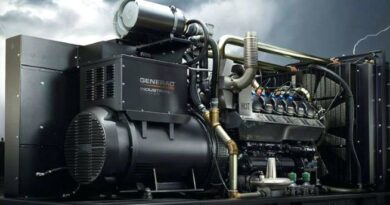
Noise Control Management
Description
One possible cause of hearing damages on men is the level of noise exposures that beyond the limit of sound pressure level or percent dose allowed for a normal working hours. Industrial workers, who receive noise exposure in their everyday working environment, are vulnerable to experience hearing damage either in the form of temporary (TTS) or permanent threshold shift ((PTS). Therefore, the industry should establish a professional program of noise control management in order to protect the health and safety of the workers.
In association with Indonesian regulation for safety and healthy working condition (PP No. 3 1975), limit of Leq 85 dBA noise exposure level for 8 hours working day is required for work places. Instead, a Leq limit of 90 dBA steady noise levels for 8 hours working day is determined in OSHA regulation (1974) for occupational noise. Higher levels of noise will reduce the allowable exposure time or working period of workers; therefore, a feasible administrative or engineering noise controls should be applied. When employees are subjected to noise exposures exceeding the limit stated in OSHA regulation, personal ear protectors, such as, earplug or earmuff, shall be provided.
Objectives
The objectives of this training are:
Learn about noise in industry and the effects of noise to workers
Learn about noise measurement and analysis techniques including instrumentation
Learn how to design, monitor and implementing a management system for preserving health and safety of workers from noise exposure in industry
Learn how to design, monitor and implementing noise control engineering in industry
Outline
INTRODUCTION
FUNDAMENTALS OF ACOUSTICS
a. Sound Levels and Decibel Scales
b. Sound Propagation Outdoors and Indoors
c. Air and Structure borne Sound Propagations
NOISE SOURCES IN INDUSTRY
a. Fan Noise
b. Compressor and Pump Noise
c. Jet Noise
d. Pipe Flow Noise
e. Other Noise Sources
NOISE MEASUREMENT AND FREQUENCY ANALYSIS
a. Measurement Methods
b. Microphones
c. SLM and Integrating Devices
d. Time Varying Noise and Spectrum Analysis
e. Audiometer
HEARING CHARACTERISTICS
a. Hearing Mechanism and Threshold of Hearing
b. Loudness Levels and Computation
c. Hearing Loss and Audiometric Test
EFFECTS OF NOISE ON HUMAN
a. Annoyance Levels
b. Noise Induced Hearing Loss
c. Noise Dose Calculation
NOISE CONTROL TECHNIQUES
a. Planning a Noise Control Program
b. Noise Control by Planning and Maintenance
c. Enclosure and Barriers
d. Silencers, Mufflers and Attenuators
e. Noise Control by Room Treatment
NOISE CONTROL MANAGEMENT
a. Priority Planning and Approach
b. Noise survey and Visual Inspection
c. Noise Abatement Procedures and Guidelines
d. Hearing Conservation Program
e. Noise Control Standards and Regulations
TUTORIALS AND PRACTICAL WORKS
a.Insulation
b.Noise measurement and frequency analysis
c. Noise Dose
Venue
Bandung / Yogyakarta / Bali
In House Training:
Depend on request
“if there is demand for the implementation of training in another city we are ready to serve”
Participants
Safety, Health and Environmental Manager / Engineer, Power Plant and Process Facility, Process and Design, Maintenance Manager / Superintendent / Engineer, Chief Medical Officer
Instructor
Iswantoro, Msi
Course fee
Biaya pelatihan sebesar Rp 8.500.000/peserta Non residensial. Khusus untuk pengiriman 3 peserta dari perusahaan yang sama, biaya pendaftaran sebesar Rp.8.000.000
Facilities
Training Module
Flash Disk contains training material
Certificate
Stationeries: NoteBook and Ballpoint
Backpack
Training Photo
Training room with Full AC facilities and multimedia
Lunch and twice coffeebreak every day of training
Qualified Instructor
Exclusive Gifts
Transportation for participants from hotel of participants to/from hotel of training (if minimal participants is 4 persons from the same company)
Noise Control Management
20 – 23 Januari 2014
11 – 14 Februari 2014
18 – 21 Maret 2014
22 – 25 April 2014
20 – 23 Mei 2014
17 – 20 Juni 2014
19 – 22 Agustus 2014
16 – 19 September 2014
7 – 10 Oktober 2014
18 – 21 November 2014
9 – 12 Desember 2014